What the diary looks like
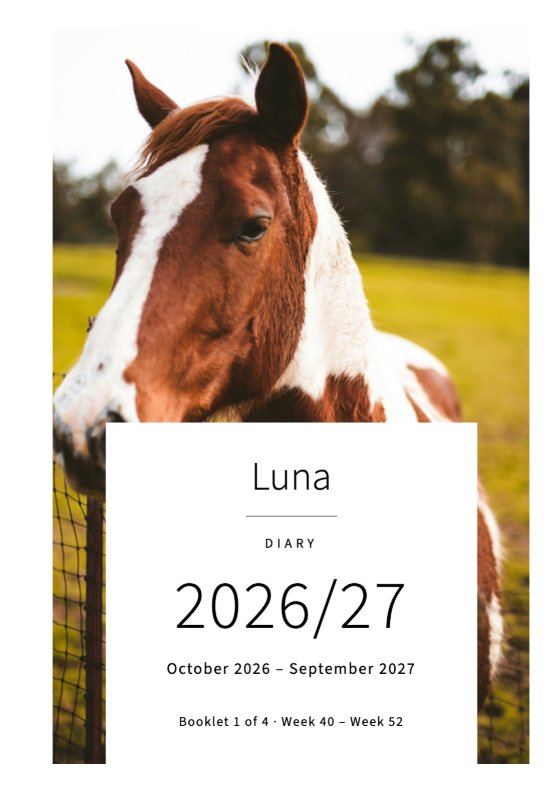
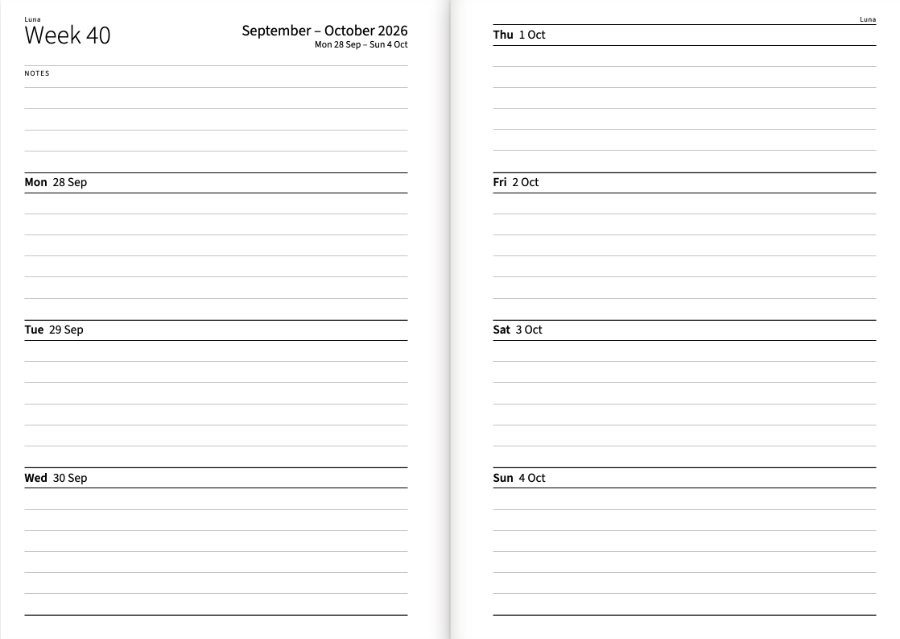
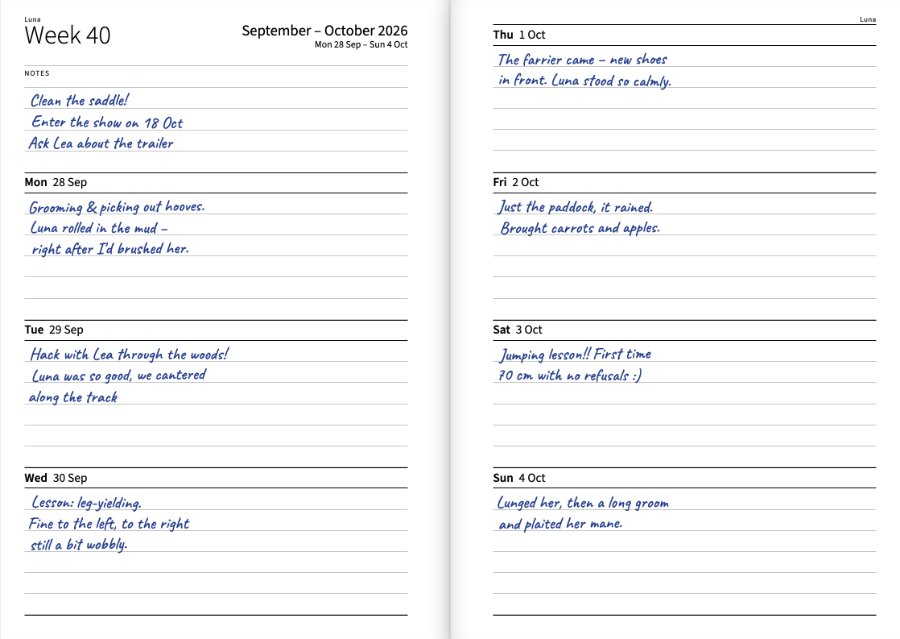
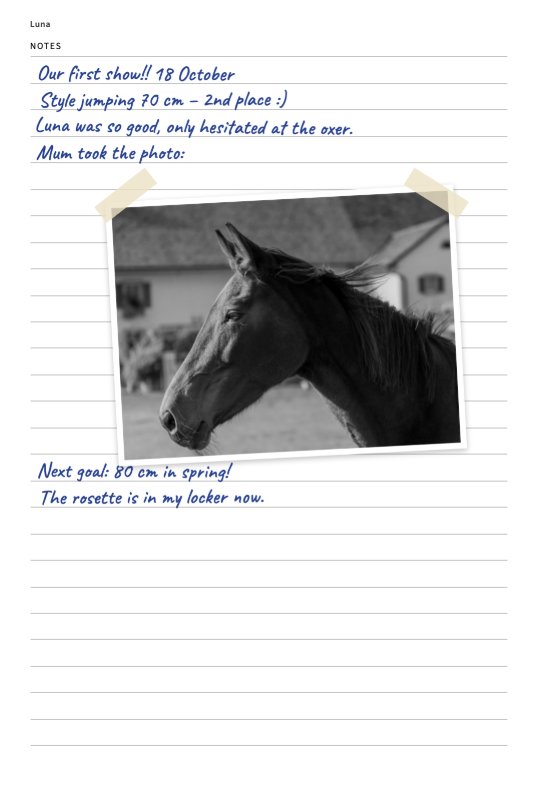
The cover, an empty week, the same week filled in and a notes page from the back – just as it comes out of the printer.
How a week is laid out
Every spread is one week. Monday, Tuesday and Wednesday are on the left, Thursday to Sunday on the right – so Saturday has as much room as Monday. Every day has its date and lines to write on. What goes in is up to you: what you did together, how your horse was, what your instructor said, the weather, the hooves. Some write three words a day, some half a page once a week.
The diary starts in the month you choose and runs for three, six or twelve months. Your horse’s name is at the top of every page.
The days have no fields for medication or temperature, and there are no tables for the vet and farrier at the back – just the profile at the front with phone numbers and normal values. If you need more, the health logbook from Horse Logbook is the right one – with a cough scale, medication and temperature.
A year and a half freeNew here? The first 50 people to create an account through this site get a year and a half of diary free – a full year plus half a year.